Posts

The Pasupatabrahma Upanishad (The Mysteries of the Divine Supreme Being)

 The Pasupatabrahma Upanishad  (The Mysteries of the Divine Supreme Being) The Pasupata Brahmana Upanishad, one of the 31 minor Upanishadic texts associated with the Atharva Veda, is classified as  one of the 20 Yoga Upanishads. The Upanishad presents profound insights into the nature of the divine and its connection to human consciousness. Its name “Pasupatabrahma,” signifies the combination of the divine aspects of Pashupati (Lord of all beings) and Brahman (the ultimate reality). Its exact date of composition remains uncertain but it is believed to be emerged between the 9th and 13th centuries AD.  It offers a unique perspective on the divine principle of Pasupatabrahma, often associated with Lord Shiva. The text is structured in two khanda (sections). The opening verses are in the form of questions addressed to Hindu creator god Brahma by his son Vaishravana. Then the text discusses soul as Hamsa, yoga, meditation, the uselessness of external rituals and the need...
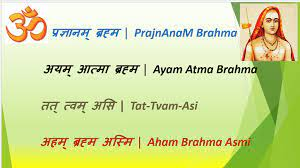
The Mahavakya Upanishad (The Great Utterances of Oneness)

Image
  The Mahavakya Upanishad (The Great Utterances of Oneness) The Mahavakya Upanishad, one of the 31 minor Upanishadic texts associated with the Atharva Veda, is classified as one of 20 the Yoga Upanishads. Its exact date of composition remains uncertain but it is believed to be emerged between the 100 BC to 300 AD. The Upanishad expounds on the profound teachings encapsulated in the Mahavakyas— the great utterances that reveal the ultimate truth of oneness. The Upanishad explores the profound nature of these utterances, such as Tat Tvam Asi (Sels is the Brahm), Pragnanam Brahm (Consciousness is the Brahm), Ayamtama Brahm (Atma is the Brahm) and “ Aham Brahm asmi ” (I am the Brahm), which reveal the inherent oneness of all existence. These Mahavakyas serve as guiding principles for seekers on the path of self-realization. The text describes the nature of Atman (self, soul) and Brahman (ultimate reality), then asserts that they are identical and liberation is the state of fully u...

The Sandilya Upanishad

Image
 The Sandilya Upanishad (Exploring the Teachings of Sage Sandilya) The Sandilya Upanishad (named after the sage Sandilya), one of the 31 minor Upanishadic texts associated with the Atharva Veda, is classified as  one of the 20 Yoga Upanishads that provides profound insights into the nature of reality and the path to self-realization. This Upanishad presents a comprehensive philosophical and spiritual framework that guides seekers on their journey towards spiritual awakening. The text is primarily focussed on Yoga techniques and is among the most detailed in the Upanishadic corpus of texts dedicated to Yoga. It describes ten Yamas (ethical don'ts, restraints), ten Niyamas (ethical to do list, observances) and eight Asanas (postures), along with three Pranayamas, five types of Pratyaharas, five kinds of Dharana, two types of Dhyana and one Samadhi. The Upanishad contemplates the nature of reality, presenting the concept of Brahman as the ultimate reality underlying all existence...

Unveiling the Mysteries of Lord Ganapati

Image
 Unveiling the Mysteries of Lord Ganapati The Ganapati Upanishad (also known as the Ganapati Atharva Sirsha Upanishad), one of the 31 minor Upanishadic texts associated with the Atharva Veda, is classified as one of the 14 Saiva Upanishads. It reveals profound insights into the nature and significance of Lord Ganapati, the elephant-headed deity. Its exact date of composition is uncertain, but it is believed to have originated during the post-Vedic period.  The Upanishad expounds upon the philosophical aspects of Lord Ganapati, providing deep insights into his nature, attributes, and symbolism. It describes Lord Ganapati as the supreme consciousness, the embodiment of wisdom, and the remover of obstacles. He is considered the primal sound (Om) and the divine energy that pervades the universe. It also highlights Lord Ganapati’s association with the Muladhara Chakra, the energetic center located at the base of the spine. It symbolizes the awakening of spiritual energy and the gro...

Exploring the Sacred Ritual of Ash Application in the Upanishad

Image
 Exploring the Sacred Ritual of  Ash Application in the Bhasma Jabala Upanishad The Bhasma Jabala Upanishad, one of the 31 minor Upanishadic texts associated with the Atharva Veda, is classified as one of the 14 Saiva Upanishads. The Upanishad sheds light on the ritualistic practice of applying sacred ash (bhasma) as a symbol of spiritual purity and devotion. It explores the philosophical foundation underlying the ritual of bhasma application. It delves into the concept of ash (bhasma) as a powerful symbol of detachment, renunciation, and spiritual transformation.  Bhasma, typically derived from the sacred fire ritual (yajna), represents the ephemeral nature of existence and the ultimate reality beyond the transient world. The application of bhasma is not merely an external act but a deeply symbolic gesture. It signifies the practitioner’s willingness to let go of attachment to worldly desires and surrender to the divine. By wearing bhasma on the body, one seeks to align ...

Unraveling the Mysteries of Divine Power

Image
Unraveling the Mysteries of Divine Power The Sarabha Upanishad, one of the 31 minor Upanishadic texts associated with the Atharva Veda, is classified as  one of the 14 Saiva Upanishads. It extols Lord Shiva in his fierce aspect as Sarabha. Shiva as the lord of the universe, created both Brahma and Vishnu. Then he assumed the form of Sarabha to kill Narasimha, an incarnation of Vishnu, who is described in the verses as destroying the worlds. There is another verse which describes Vishnu as worshipping the feet of Shiva. According to the sixth verse, Shiva not only kicked Kala the god of death, but also Shiva the destroyer who consumed Halahala, the poison the came out during the churning of the oceans. The Upanishad explores the divine form of Sarabha, a mythological creature with a unique combination of animal and human features representing the embodiment of immense power and strength. It explores the symbolism of Sarabha as a representation of divine energy, transformation, and t...

Exploring the Mysteries of the Divine Power

Image
Exploring the Mysteries of  the Divine Power The Brihajjabala Upanishad, one of the 31 minor Upanishadic texts associated with the Atharva Veda, is classified as  one of the 14 Saiva Upanishads which deals with the methods of worshipping Shiva, such as wearing Vibhuthi, the holy ash, and Rudrakshas, the holy beads. While its exact date of composition is uncertain, but its teachings reflect the broader spiritual traditions of ancient India. The Upanishad is divided into 8 chapters. It is presented in the form of a dialogue between Shiva and Busundi, a descendant of Sage Jabali, his devotee. Shiva is represented here as Kalagni Rudra, a destructive form of the god Shiva who is identified with Bhairava. The Upanishad delves into the profound concepts of divinity, self-realization, and the attainment of spiritual power. It holds a significant place among the various Upanishads, which are considered the essence of Vedic wisdom. It explores the concept of harnessing and channeling t...